Artist, single mother and globetrotter
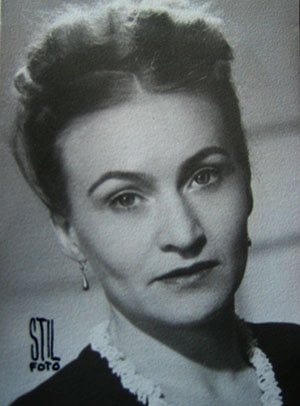
June Montana Lorentz/Forsander was born in June 1915 in the mining town of Butte in Montana, USA. After her father passed away, mother returned with her two daughters to Norrbotten where Montana went to school. Montana knew early on that she wanted to be an artist, and already as a 12-year-old sold portraits for 3 kr/each. After the real exam in Boden, art school follows in Stockholm and Helsinki.
Art trips in Europe
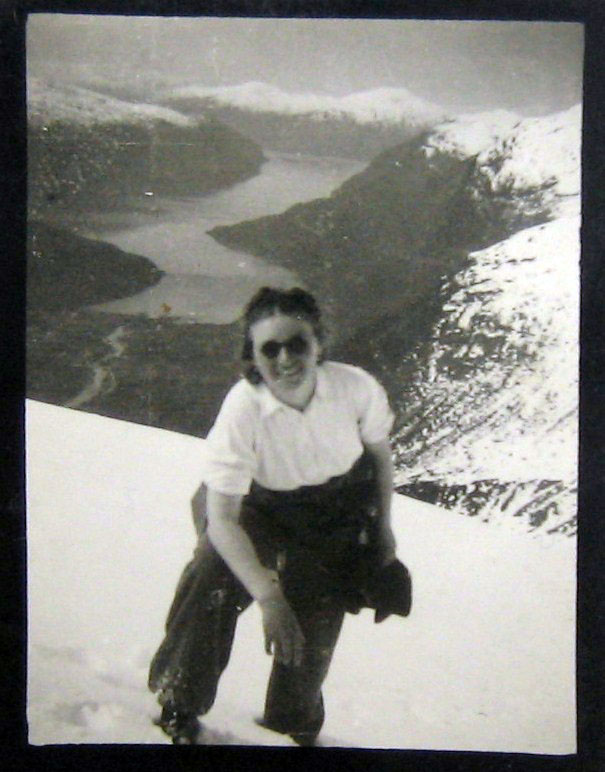
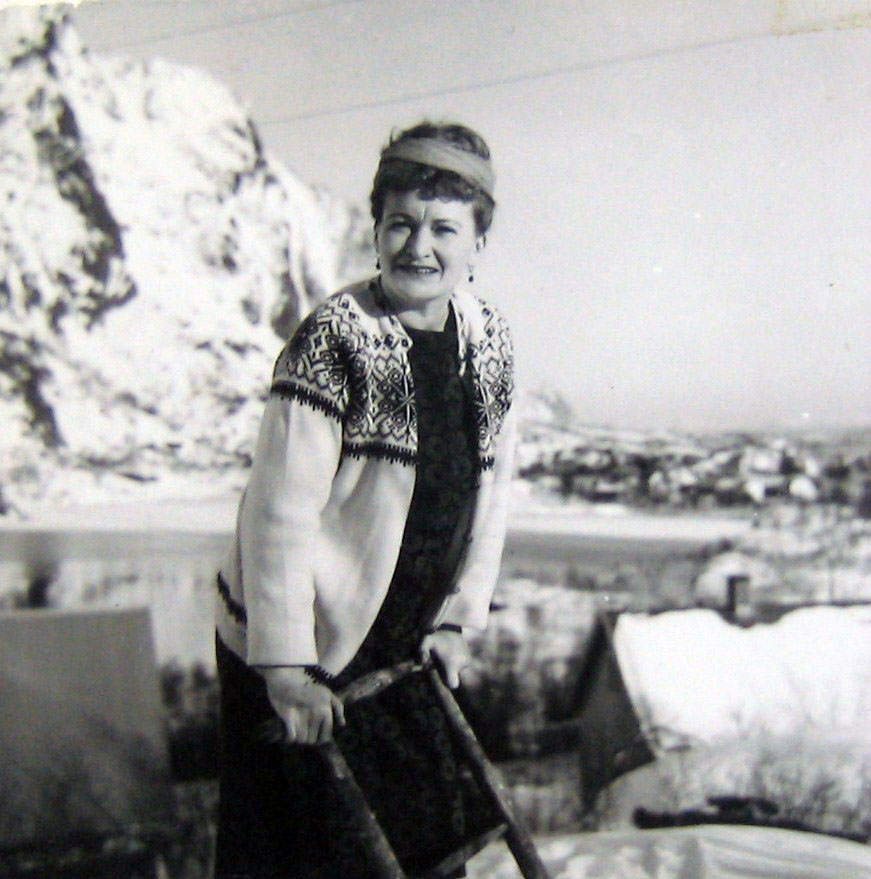
When she met her future husband, the landscape painter Johan Lorentz from Lofoten, she accompanied him to Norway, where they also had their first exhibitions. They make several art trips together to Italy, France, the Faroe Islands, Svalbard and Germany, among others. During the German occupation of Norway in 1940, they cross the border to Sweden together. In 1941 they get married and their first daughter is born in Sundsvall. They live in different places, including in Klövsjö, Värmland, where their mural in the community center is still there. In 1945, Montana also made a larger work “Helg och söcken” which can be seen at Kalix Folkhögskola. When their second daughter is a newborn, Johan becomes seriously ill and dies quickly in 1946.
Historisk rapsodi (Historical Rhapsody)
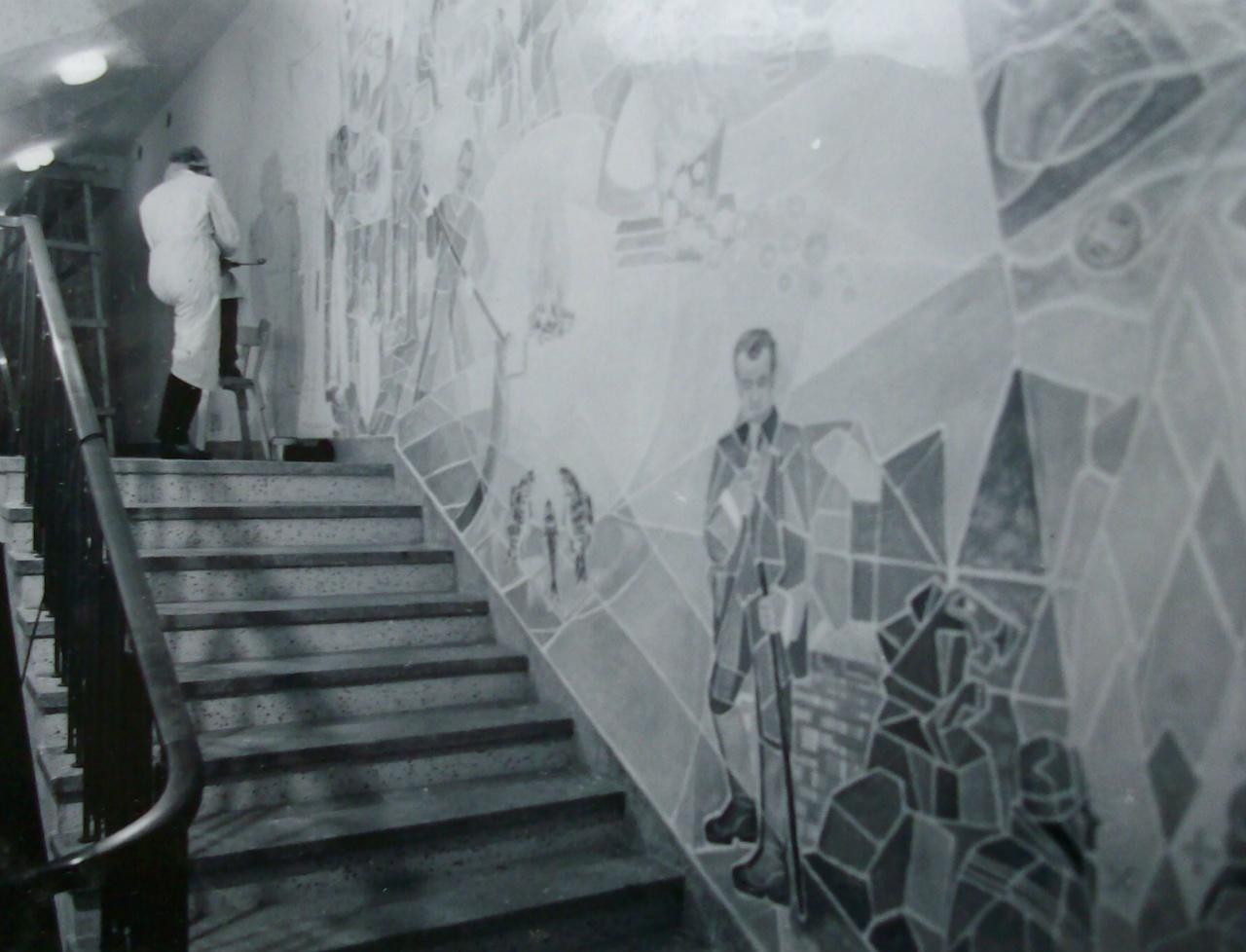
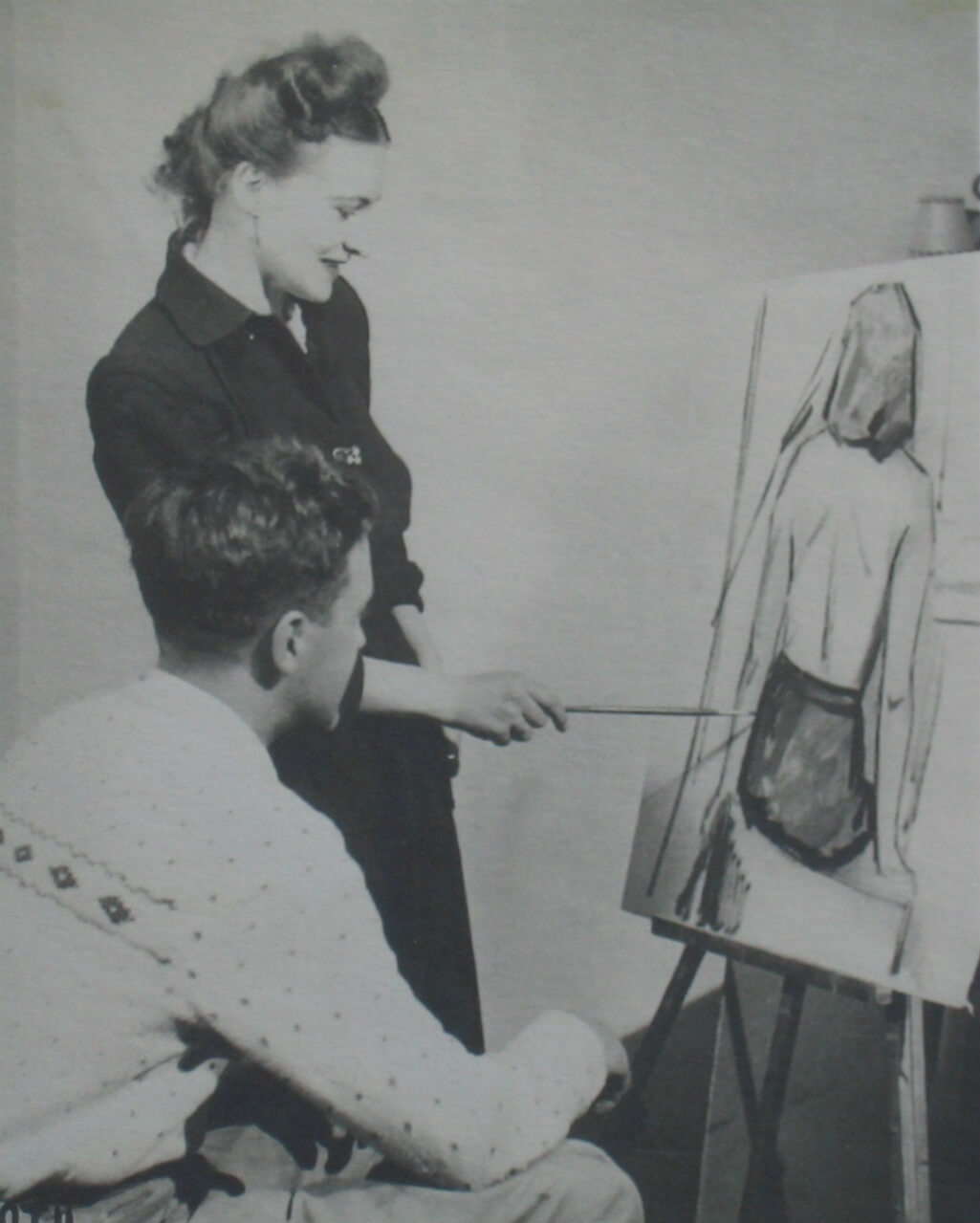
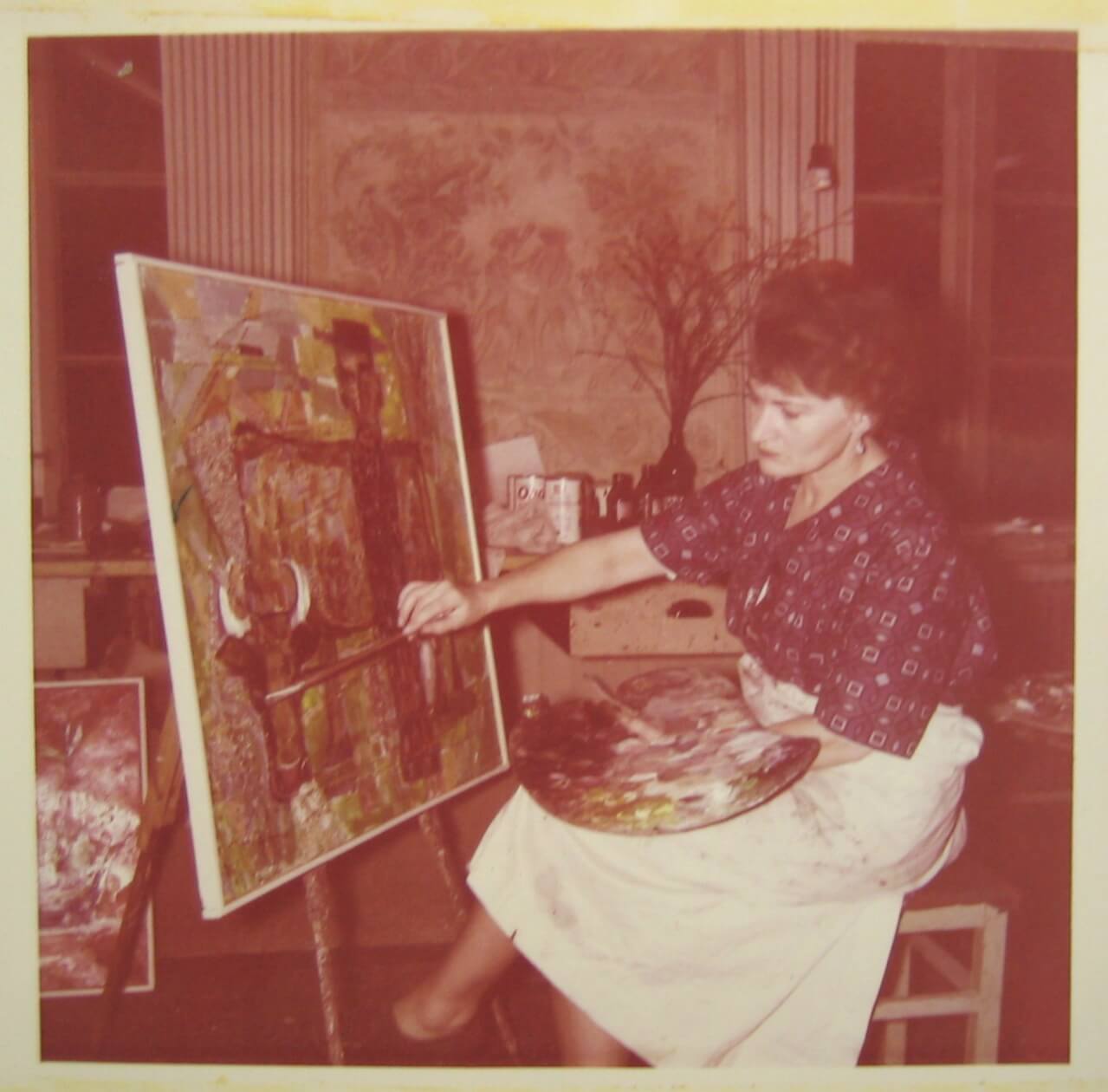
Montana works hard while grieving her husband and fellow artist. In the early 1950s, she was a driving force and the only woman in the artists’ colony Bodenskolan. She makes a living through art and teaches both painting and art science. There are probably many people in northern Sweden who have portraits of older relatives in their homes. She also works as a drawing teacher, for example in Norsjö, Västerbotten. In 1955, she worked as a teacher at Framnäs Folkhögskola outside Piteå, where one of her more famous works, the mural “Historisk rapsodi” (Historical Rhapsody) was created. She spends almost a year in Portugal, where her youngest daughter is allowed to accompany her, and has many sketches of homes that turn into new works.
Own showroom and studio
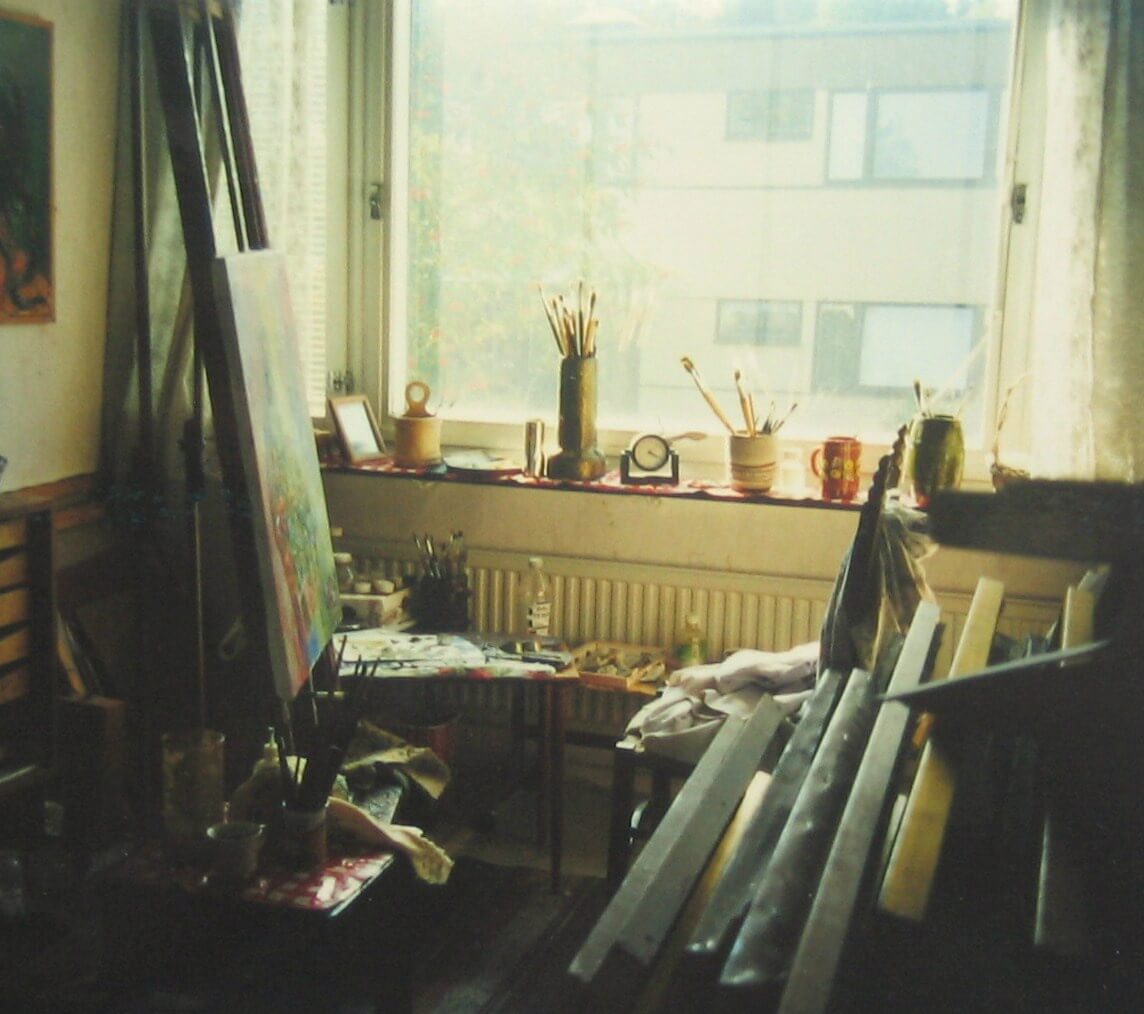
During the mid-60s, Montana meets the artist friend Rolf Magnusson and together they embark on new study trips to Norway, Greece and to Bohuslän and Skåne. Together with him, she also returns to Spitsbergen. Montana now has her starting point in Svenljunga, where she also has her own showroom and studio. When Rolf also dies quickly in 1967, she has to travel on her own or sometimes together with the grandchildren. The exhibitions replace each other and she is also a committed writer and debater. Injustice and the conditions of women are also important themes in her colourful artwork.
The last exhibition
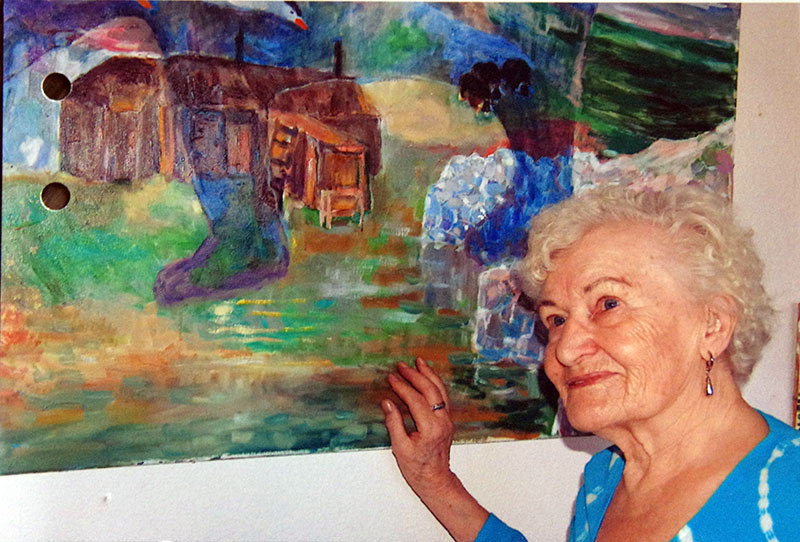
At the end of the 70s, Montana moves to Landskrona, a little closer to her sister Viola and eldest daughter who lives in Denmark. She continues to paint and exhibit, now mainly in southern Sweden. In the 90s, she is back in Svenljunga where she lives and works until her death in 2008. At the last exhibition in 2004, she is 89 years old and still creates new paintings. Now her art and memory lives on through the works she left behind and the memory of family and friends.
Education
Montana has been trained as a painter in Stockholm and Helsinki and then made several study trips both alone and together with others. She was the initiator of the group of active artists that came to be known as Bodenskolan. Her art can be found in many homes where she has been active in, among other places, Norrbotten, Västerbotten, Västra Götaland and Skåne, but also in the rest of the Nordic region and Europe. Some monumental paintings and mosaics can be viewed in Framnäs Folkhögskola, Kalix Folkhögskola and Klövsjö community center. Some early works can be found in Uppsala University’s cultural heritage collection.